Byram property owners can apply for a free native tree through a federally funded program that planted its first round of trees in September and will accept new applications in spring 2027.
The Byram Branches program, led by the Greenwich Conservation Commission in partnership with the Greenwich Tree Conservancy, the Byram Neighborhood Association and the Parks and Recreation Department, targets Byram's limited tree canopy. Byram has less tree cover than most other areas of town and is Greenwich's most densely populated neighborhood, according to the conservancy.
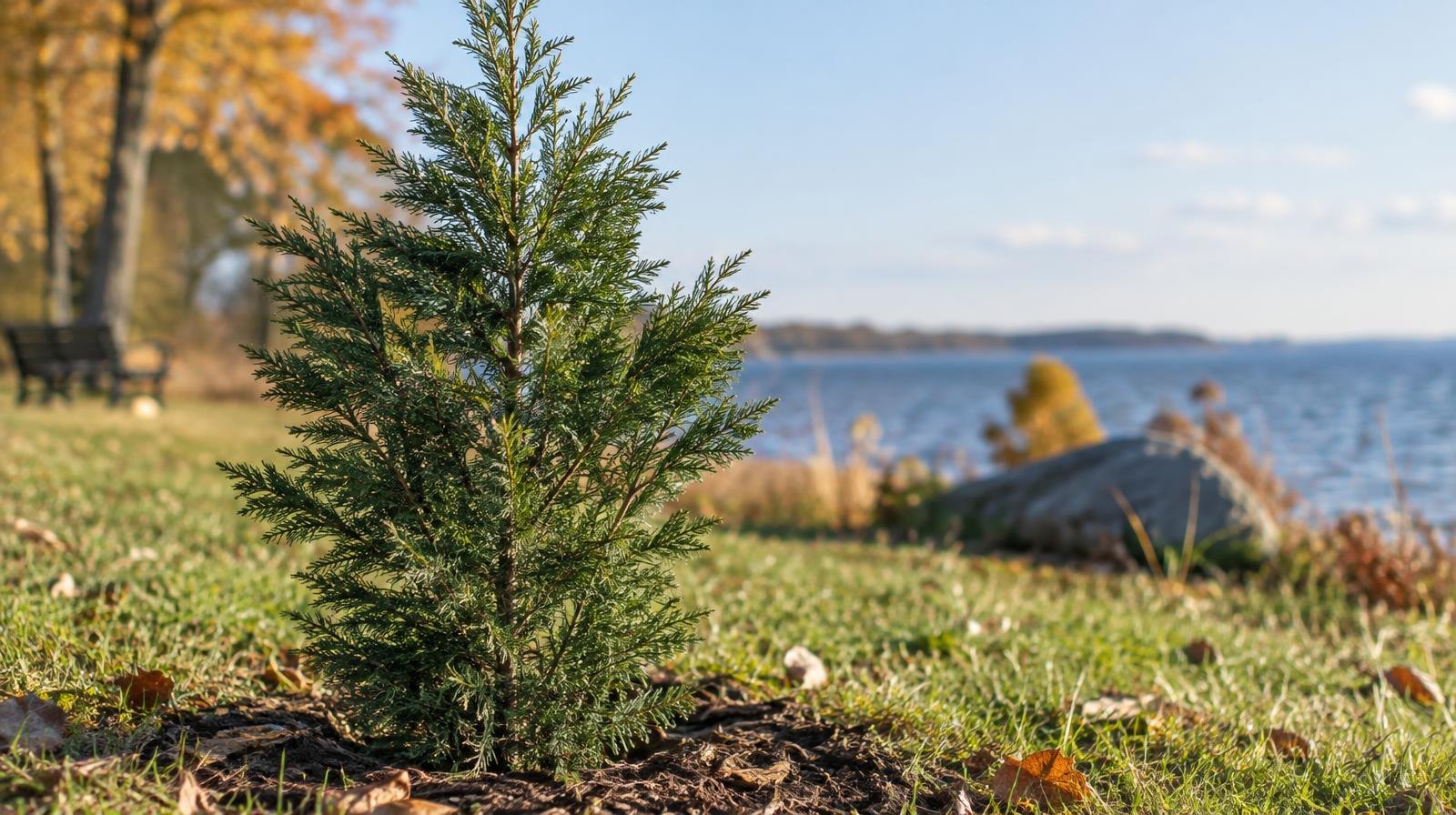
The program's first visible result: ten Eastern red cedars now line the shoreline at Byram Park. The conservancy planted the native evergreens there in September, as we reported Oct. 8. The species tolerates salty soils and harsh coastal conditions and can live more than 450 years.
Byram Branches focuses on two equity-priority zones where canopy coverage falls below 30% and vulnerability to heat and flooding is elevated, according to the conservancy's application page. Those zones were identified using the DEEP Urban Forestry Screening Tool and the Tree Equity Scorecard.
A parallel track covers Byram properties outside the two priority zones, making all Byram property owners eligible for a free tree, the conservancy said.
Funding comes from a USDA Forest Service Trees for Communities Grant administered by the Connecticut Department of Energy and Environmental Protection (DEEP), according to the town's Byram Branches page. The first application round opened Aug. 15. A second round will open in spring 2027.
The town's website lists 13 available species, including blackgum, shagbark hickory, American sycamore, serviceberry, Eastern redbud, red maple, sweetgum, hackberry, American linden, American holly, and three oaks. Final availability may vary based on nursery stock and site conditions.
Low canopy means less protection against air pollution, stormwater runoff and the urban heat-island effect. Executive Director Kate Dzikiewicz has also drawn a connection between tree cover and water quality. Byram Beach recorded 118 bacteria-related closures between 2015 and 2025, according to the conservancy. Trees reduce that pollution by intercepting rainfall and allowing water to soak into the ground before contaminants reach nearby waterways, the organization noted.
The new cedars at Byram Park will serve wildlife, too. The park is a stopover for migratory birds and provides year-round habitat. As the cedars mature, their berrylike cones will feed cedar waxwings, yellow-rumped warblers and small mammals, the conservancy said.
Byram property owners can apply through the conservancy's Byram Branches application page or contact the Conservation Commission at [email protected] or 203-622-6461.
What's next: Second Byram Branches application round opens spring 2027.