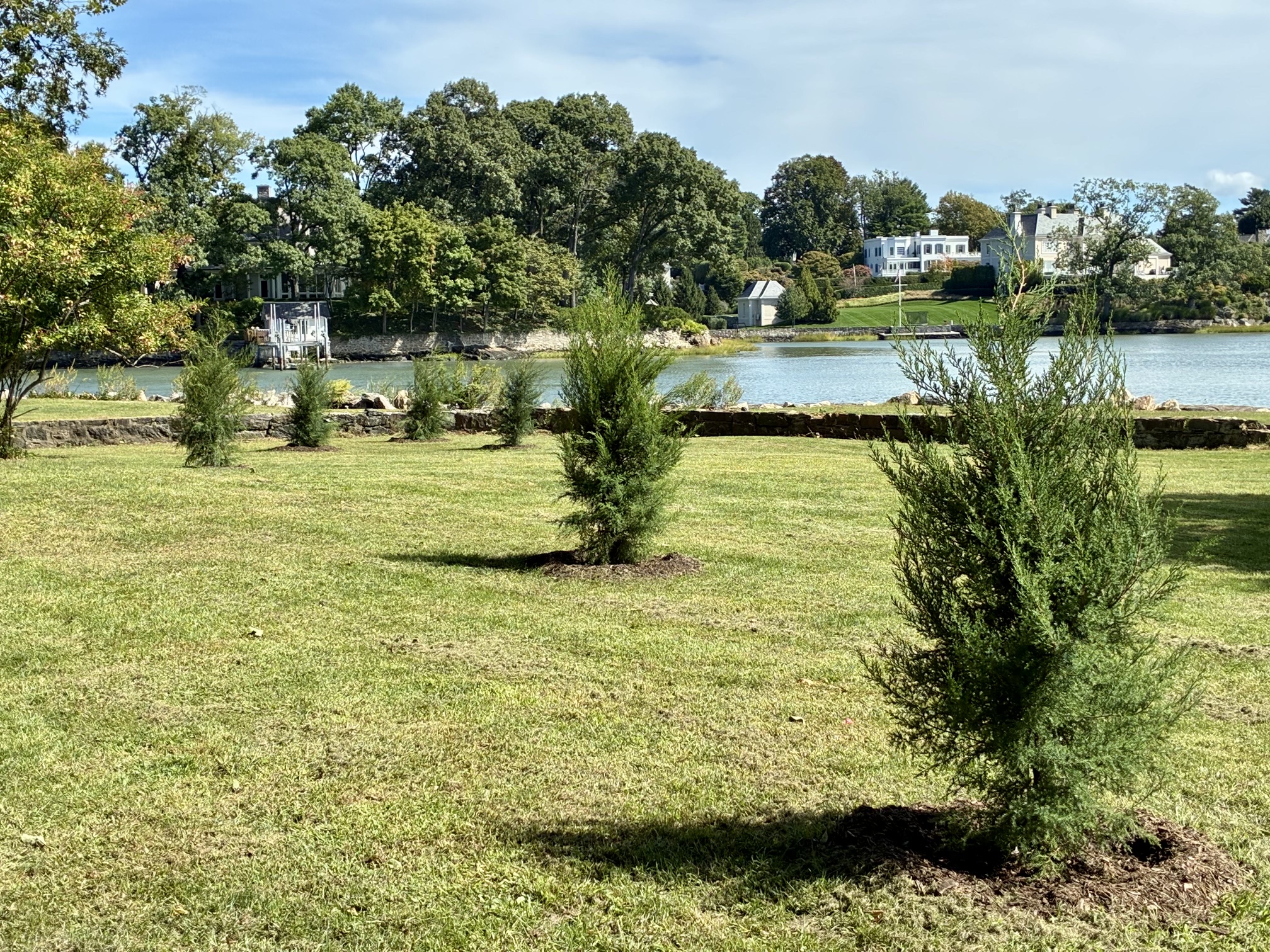
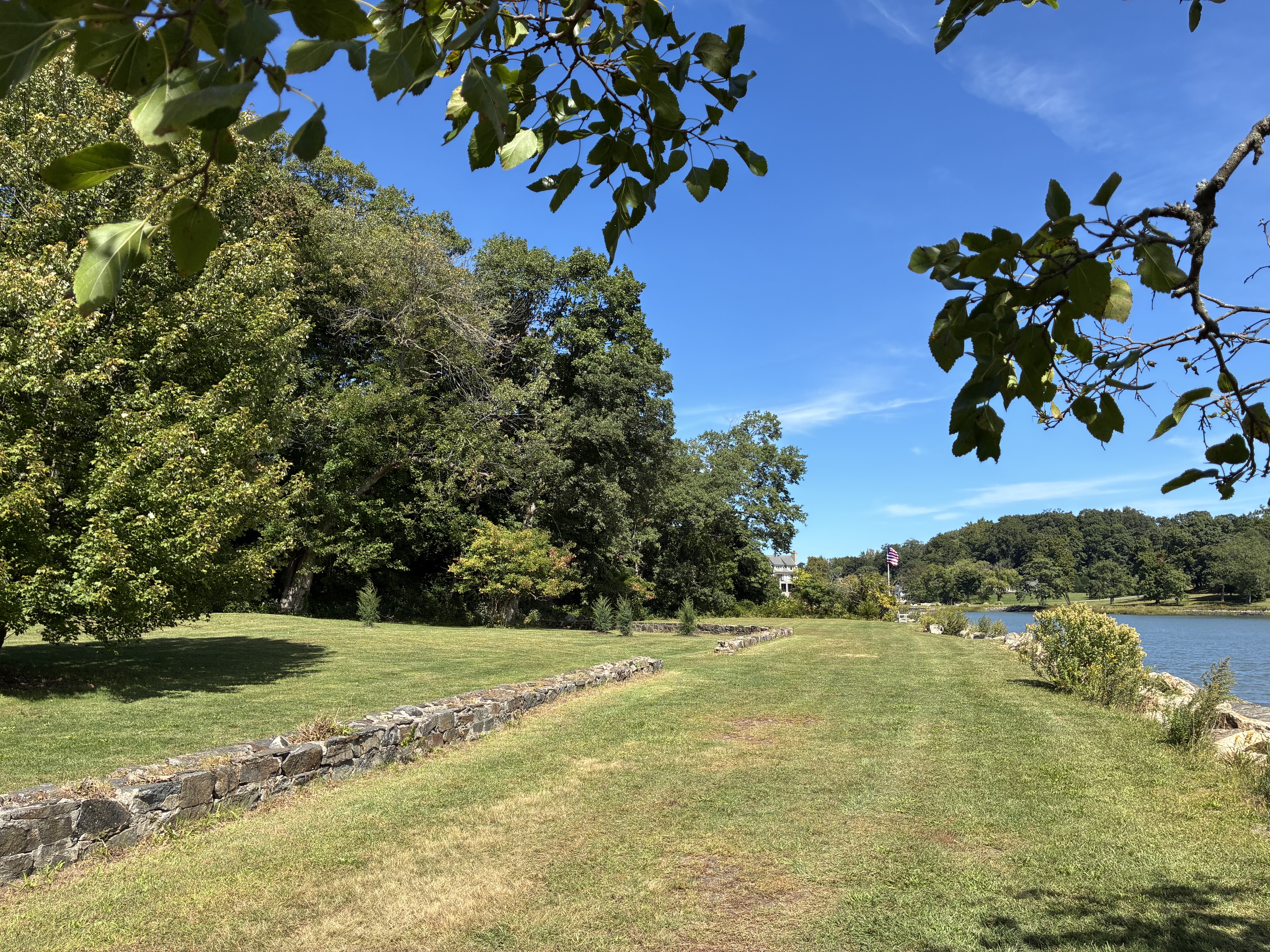
Ten Eastern red cedars line the shoreline at Byram Park after the Greenwich Tree Conservancy planted the native evergreens there in September.
The trees, a species native to Connecticut that can live more than 450 years, were chosen for their ability to tolerate the salty soils and harsh coastal conditions at the park, the conservancy said in a press release.
The planting targets a gap in Greenwich's urban canopy. Byram is the town's most densely populated neighborhood and has less tree cover than most other areas, according to the conservancy. Low canopy means less protection against air pollution, stormwater runoff, flooding and the urban heat island effect.
Byram Park draws birders year-round. The park serves as a stopover for migratory birds and provides habitat for species that stay through every season.
As the cedars mature, their dense foliage will offer nesting and roosting sites plus shelter from winter weather. Their berrylike cones will provide a winter food source for cedar waxwings, yellow-rumped warblers and small mammals. The cedars also support butterflies and moths, which serve as food for insectivorous birds.
The planting is part of a broader push. The conservancy is working with the Town of Greenwich Conservation Commission through the Byram Branches program, a federally funded urban forestry initiative that provides free native trees to Byram property owners.
The program focuses on two equity-priority zones where canopy coverage falls below 30% and vulnerability to heat and flooding is elevated, according to the town's website.
Funding for Byram Branches comes from a USDA Forest Service Trees for Communities Grant administered by the Connecticut Department of Energy and Environmental Protection. The first round of applications opened Aug. 15, and the first trees are scheduled for planting in fall 2026. A second application round will open in spring 2027.
The conservancy, led by Executive Director Kate Dzikiewicz, has also highlighted the connection between tree cover and water quality in Byram. Byram Beach recorded 118 bacteria-related closures between 2015 and 2025, and the neighborhood's limited canopy makes preserving mature trees especially important, the organization has noted.
Byram property owners interested in a free tree can apply through the Byram Branches application page.