
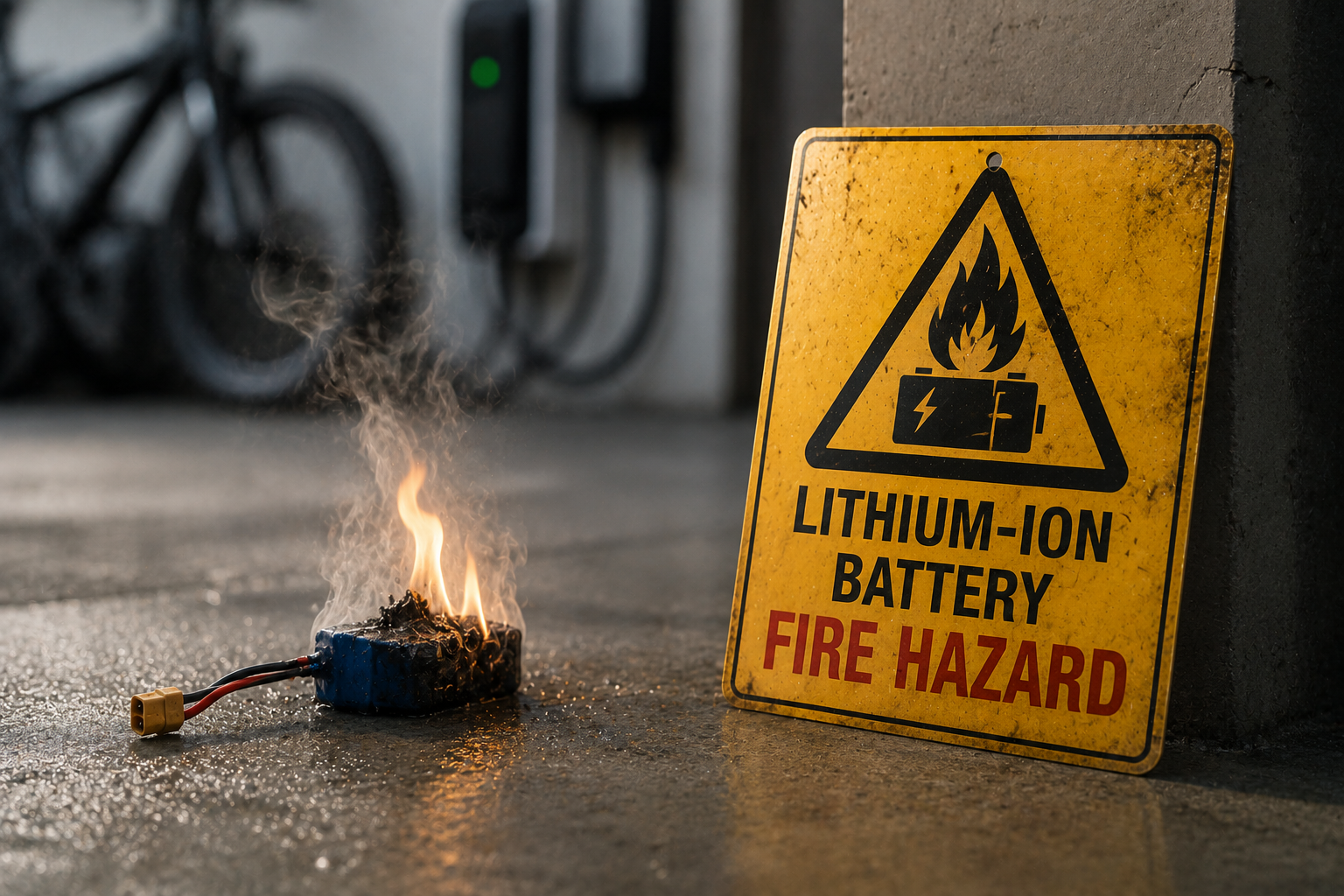
Lithium-ion batteries in e-bikes, laptops and cordless tools pose a growing fire risk in Greenwich homes, according to Cos Cob Fire Police Patrol president Stephanie Dunn Ashley.
Ashley, who also serves as CEO of the American Red Cross Metro New York North Chapter and a volunteer EMT with Greenwich Emergency Medical Services, laid out the danger in a column published Oct. 3 in the Greenwich Sentinel. Her warning comes as Fire Prevention Week runs Oct. 4–10, with the National Fire Protection Association (NFPA) centering its campaign on battery charging safety for the second straight year.
The U.S. Consumer Product Safety Commission (CPSC) reported in April that fire hazards accounted for 106 of 145 completed e-bike investigation reports. In a separate June 24 proposed rulemaking, the CPSC documented 227 incidents involving fires, explosions and related hazards tied to micromobility products between 2019 and 2023.
Products were plugged in and charging in 53% of those cases. No federal mandatory safety standard for these batteries has been finalized.
Ashley wrote that battery safety "starts first and foremost before you plug anything in. Make sure the products you're buying are listed by a nationally recognized testing laboratory like UL, ETL or CSA."
She also advised residents to use only the charger that came with a device or one approved by the manufacturer. Devices should charge on hard, flat surfaces like a table or bare floor, not on beds or couches, which can trap heat and block airflow.
Warning signs of a damaged battery include a device that feels very hot, starts to swell, smells strange, leaks, smokes or makes popping or hissing noises. Ashley urged residents to stop using any device showing those symptoms.
The CPSC has already acted on specific products. The agency warned consumers to stop using certain Rad Power Bikes e-bike batteries after 31 reports of fire, including 12 incidents causing roughly $734,500 in property damage. Some of those fires started while the battery was in storage, not charging.
Beyond batteries, Ashley stressed fire safety basics. Every home should have working smoke alarms on each level and inside bedrooms, tested regularly. The American Red Cross offers free smoke alarm installation through volunteers who visit homes.
During a home fire, residents may have only two minutes to escape. Ashley recommended identifying two exits from every room and two outdoor meeting spots for household members.
Greenwich police assist at fire scenes by securing the area and alerting the Red Cross when residents need emergency help.