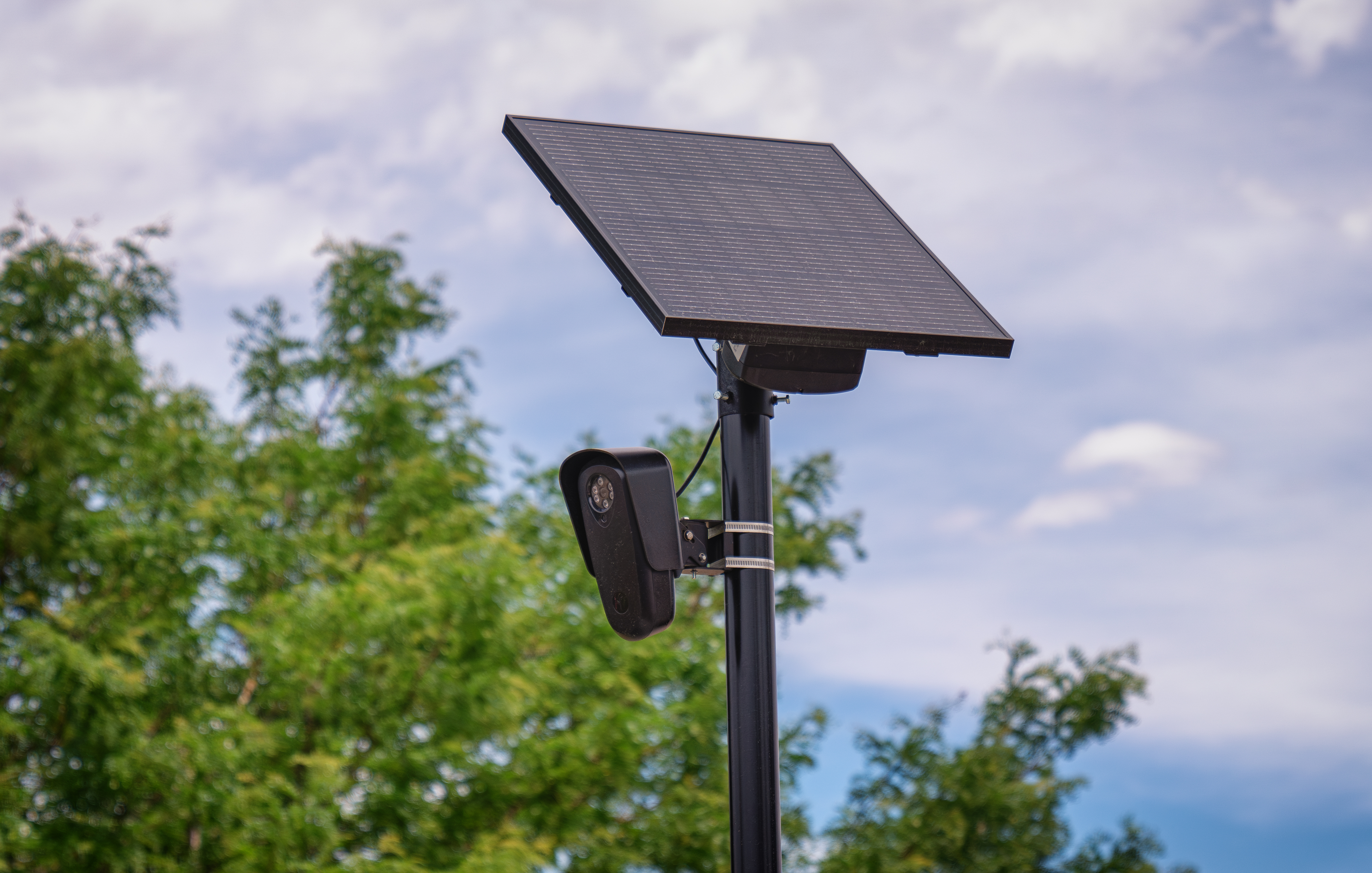
Greenwich's use of 40 automated license plate readers is drawing new scrutiny over how often the cameras scan vehicles, who can access the data and how long records of drivers' movements are kept.
Karen Fassuliotis, a member of the Greenwich Board of Estimate and Taxation, raised those questions a letter in the Greenwich Free Press, pushing back on Police Chief James Heavey's recent defense of the department's license plate reader system.
Heavey had argued in a Friday, Aug. 28, letter to the Greenwich Sentinel and in an earlier statement on the Town of Greenwich website that no one in public has a reasonable expectation of privacy, citing the 1983 Supreme Court case United States v. Knotts. He said Greenwich Police Department's data is stored only by the department, never shared with a third party or any federal agency, and that the system complies with state law.
Fassuliotis acknowledged that ALPRs help locate stolen vehicles, find missing people and generate investigative leads. But she argued Heavey's legal reasoning is incomplete.
She cited Carpenter v. United States (2018), in which the Supreme Court ruled that collecting historical cell-site location records counted as a search under the Fourth Amendment. The ability to create a searchable historical record of vehicle movements, she wrote, is fundamentally different from an officer spotting a car on a public road at a single moment.
"The fact that individual observations occur in public does not automatically resolve the constitutional question when technology permits the government to aggregate, retain and search those observations over time," Fassuliotis wrote.
She also pointed to Connecticut's own legislature as evidence that ALPRs raise distinct concerns. Public Act 26-14, as amended by Public Act 26-26, limits ALPR data retention to 21 days unless the data is part of an active criminal investigation. The Connecticut Trust Act bars any use of LPR data to investigate suspected immigration violations. If the technology were as routine as ordinary observation, Fassuliotis argued, the legislature would not have created a separate legal framework for it.
Fassuliotis posed 12 specific questions she said residents deserve answers to. They include how many scans are generated each day, who is authorized to search historical data, how often audits are performed, whether audit results are independently reviewed and what procedures exist for residents to challenge improper access to their data.
GPD operates 27 vehicle-mounted plate readers built into the Axon in-car camera system and 13 fixed-location units manufactured by Rekor. Officers do not monitor the cameras live. The system generates an alert only when a plate matches an entry on a pre-loaded hotlist, according to Heavey's statement. He said the readers have helped locate missing dementia patients, apprehend a suspect who allegedly attempted to assault a Greenwich middle schooler and solve robberies. GPD may share LPR data only with agencies in Connecticut, New York, Massachusetts or Rhode Island that agree to follow Connecticut's restrictions, and the data is shielded from public disclosure under a state FOIA exemption.
The debate comes as Gov. Ned Lamont called on the Connecticut Police Officers Standards and Training Council to review ALPR use statewide. In an Aug. 7 announcement, Lamont urged all municipalities to pause installation of new cameras and ALPRs until the council finalizes guidance. He asked for that guidance within 30 days.
As of publication, Heavey and GPD had not publicly responded to Fassuliotis's letter. No town meeting, RTM hearing or formal public forum on Greenwich's ALPR policies has been scheduled.