
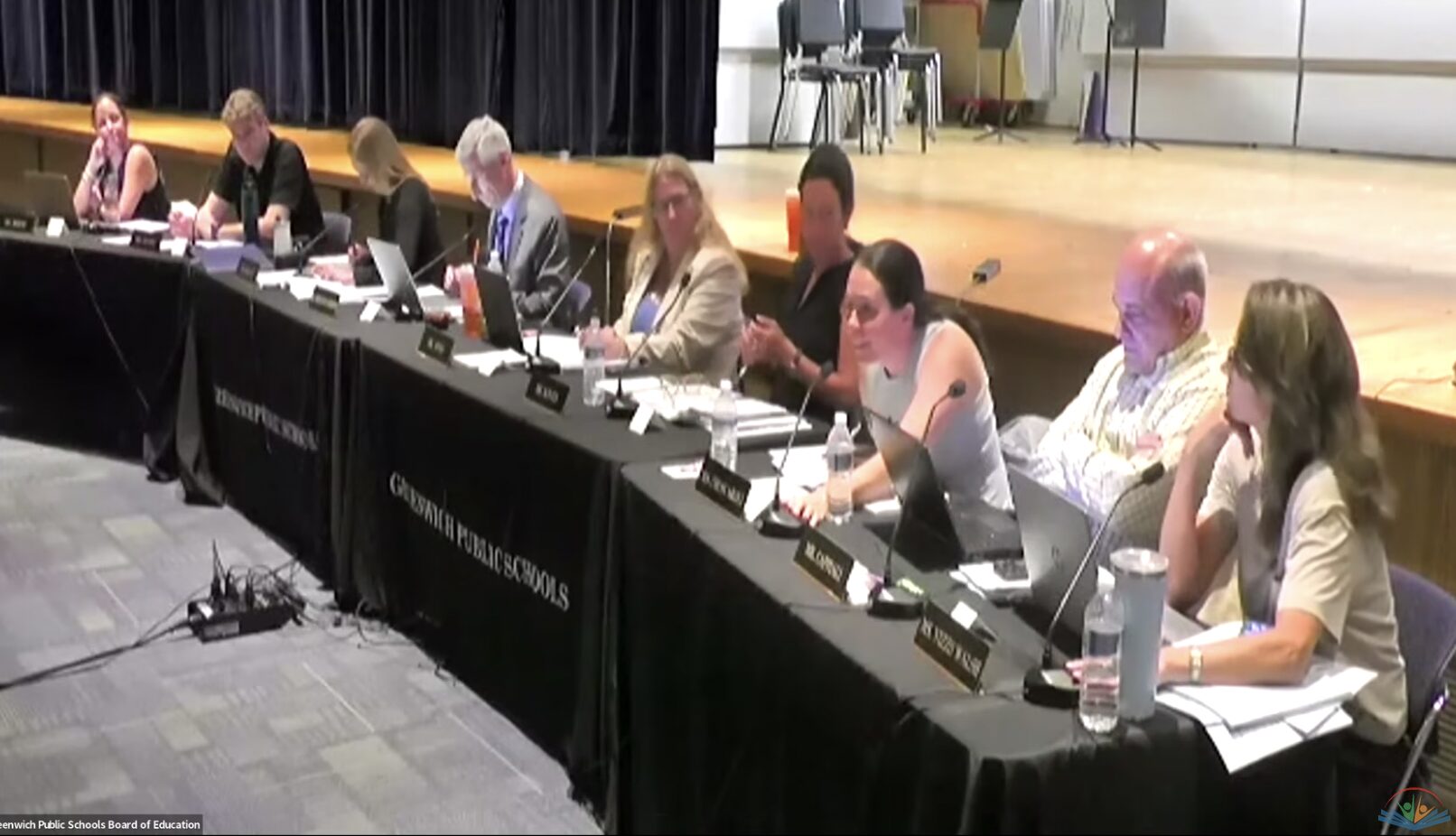
A state ruling that voided a Greenwich Board of Education emergency meeting has cast fresh doubt on a 5-3 vote that extended Superintendent Dr. Toni Jones' contract through 2028 — because the disputed appointee from that very meeting cast the deciding vote.
How the meeting itself came undone.
The Connecticut Freedom of Information Commission ruled unanimously in October 2025 that the board's October 2024 remote meeting was "null and void," finding it didn't qualify as a legitimate emergency under state law. The board had filed public notice at 10:48 a.m. and convened just 42 minutes later. "A self-made emergency of not selecting anybody in 94 days is not an emergency under the statute," FOIC hearing commissioner Christopher P. Hankins said, referencing the 94 days the board had already let pass since the seat became vacant.
What that meeting actually decided.
At that session, four Democratic board members voted to appoint Jennifer Behette to a Republican vacancy left by former chair Karen Kowalski. Months later, on May 1, 2025, the board voted 5-3 to extend Dr. Jones' contract through June 2028 — the five yes votes coming from those same four Democratic members plus Behette, with all three Republican members voting no. Since Behette's appointment is now in legal question, so is her vote on the contract extension.
The math changed once the board did.
After November's election reconstituted the board — seating Republican Paul Cappiali in the disputed spot instead — a follow-up motion to extend Jones' contract further through 2029 deadlocked 4-4 along party lines and failed, a very different outcome than the original 5-3 vote.
Settlement talks haven't gone anywhere either.
The full board voted 8-0 in May to direct its attorneys toward settlement discussions, but a June 22 vote on proposed terms deadlocked instead of resolving anything. The dispute has now generated more than $500,000 in legal fees, according to figures cited separately by both Greenwich's Republican and Democratic town committees.
The bigger legal question nobody's answered yet.
At the center of it all sits one unresolved issue: does the Board of Selectmen even have the legal authority to fill Board of Education vacancies in the first place? The FOIC explicitly declined to rule on that question, sending it instead to Stamford Superior Court, where First Selectman Fred Camillo's lawsuit against the board remains pending. FOIC director of education and communications Russell Blair acknowledged the gray area left behind, noting that "ramifications of any such nullification are not explicitly addressed" in the Freedom of Information Act — meaning even the state isn't sure what happens to votes cast by someone whose appointment has since been thrown out.
No court hearing date has been publicly scheduled.