More than 2,300 abandoned lobster traps have been hauled off the floor of Long Island Sound since 2022, and the crew doing the work just hit a milestone Greenwich boaters and anglers should know about.
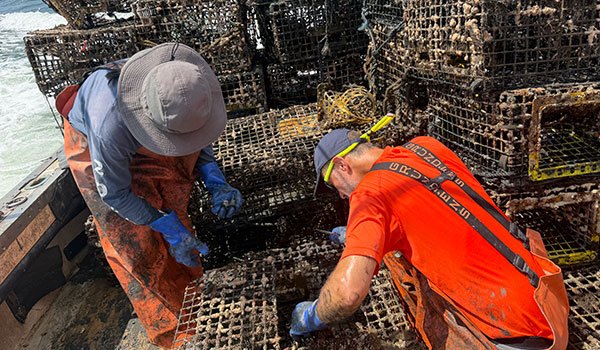
Save the Sound's Soundkeeper team completed its 100th trap-removal trip on Friday, July 31, pulling gear that has been silently killing fish in waters where Greenwich residents boat, swim and cast lines. Since the program launched in 2022, the team has recovered 2,362 lost or abandoned traps, according to Save the Sound.
Most of those traps were still catching marine life. The problem, called "ghost fishing," snares tautog, black sea bass, oyster toadfish, crabs and conches in gear no one is tending. In summer, porgy turns up; in winter, Atlantic cod.
"When these animals die inside the trap, they attract more animals," said Nico Acuna Perales, the organization's fisheries technician, who has personally worked 88 of the 100 trips.
Each trap can weigh up to 30 pounds. Staff document every animal found inside, release survivors back into the Sound and bring the empty traps ashore. Owners are identified through affixed ID tags; unclaimed traps are recycled.
How the traps got there
Long Island Sound once supported a $12 million annual lobster fishery. That industry collapsed after a mass die-off in 1999, and the lobster population never recovered. Many of the abandoned traps belong to former lobstermen who died or left the business and couldn't retrieve all their gear. Researchers estimate tens of thousands of lost traps may still sit on the Sound floor, according to WSHU.
Save the Sound works with active commercial fishermen whose knowledge of the water helps pinpoint trap hotspots. Their boats are rigged to haul strings of the heavy gear.
NOAA grant to fund more trips
The program operates year-round in partnership with The Maritime Aquarium of Norwalk, Project Oceanology, Dr. David Hudson of Remote Ecologist on the Connecticut side, and Cornell Cooperative Extension of Suffolk County on the New York side.
In October 2025, NOAA awarded $1.8 million to Cornell Cooperative Extension for marine debris cleanup in the Sound, part of which funds trap-recovery work. That grant is expected to support 120 recovery trips in 2027 and 135 trips in each of 2028 and 2029.
Across the broader coalition, crews have pulled more than 3,200 traps and documented 36,000 individual animals since 2022.
Greenwich residents who spot abandoned gear in the Sound can contact Save the Sound's Soundkeeper program through the organization's website.