
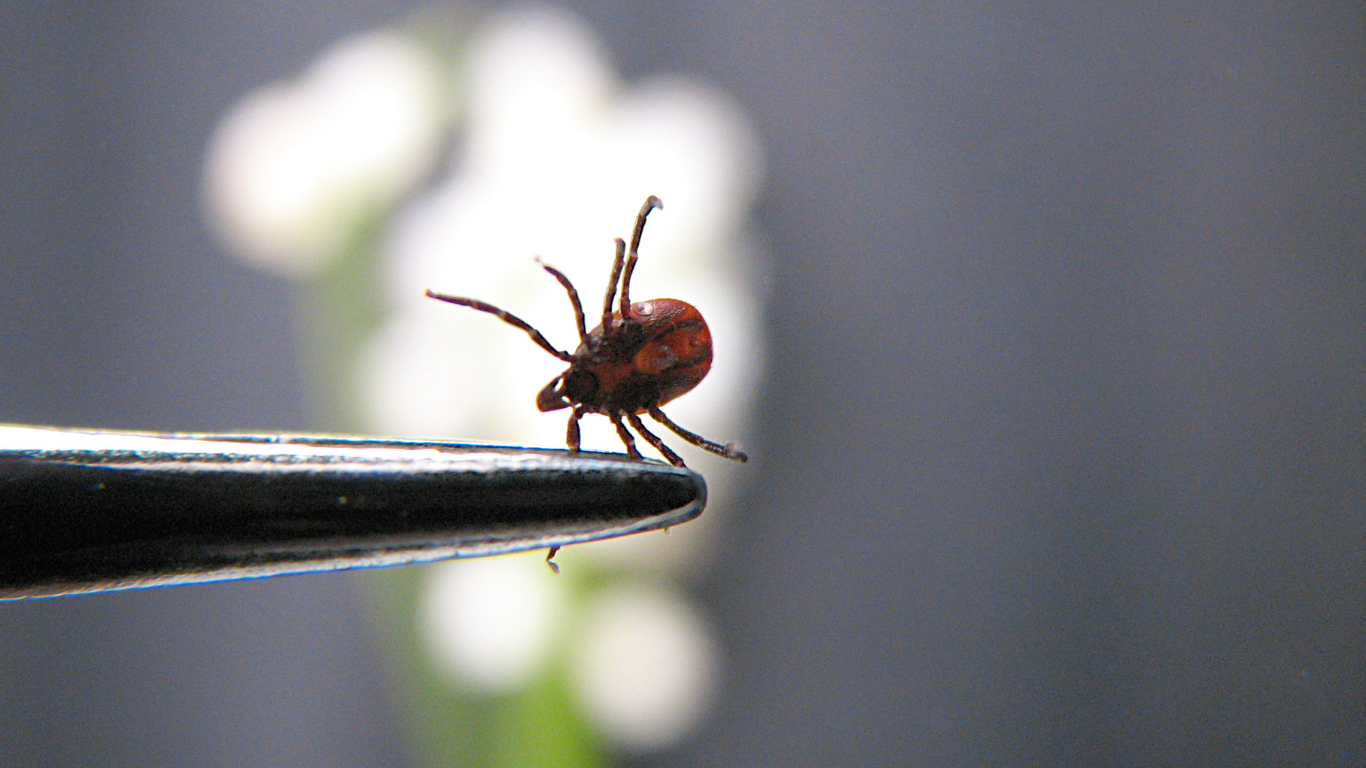
Greenwich residents heading outdoors near local waterways face a heightened risk as Connecticut's tick season reaches record levels, and Fairfield County is one of the hardest-hit areas.
More than 5,200 ticks were submitted to the Connecticut Agricultural Experiment Station from January through July, a nearly 40% increase over typical numbers for that period, CT Public reported. Goudarz Molaei, director of CAES's tick and tick-borne disease surveillance program, projects the state will exceed 6,000 submissions for the first time this year.
The problem isn't confined to wooded trails.
Molaei identified infestations stretching 50 to 100 meters from bodies of water in Fairfield and New Haven counties. "Some of those infestations are so high that it takes 5-10 minutes if you accidentally step into that area, when you step out, you might collect hundreds of ticks on you," he told CT Public.
As of Aug. 7, CAES had received 5,289 tick submissions, the highest in nearly a decade, according to CT Insider. Of the 3,181 ticks tested so far in 2026, roughly 34% carried Lyme disease. The station also recorded a 30% increase in anaplasma and a 30% increase in babesia compared to prior years.
Emergency room visits for tick bites reached their highest rate since 2017 across most U.S. regions as of April, according to the CDC. Nationally, an estimated 476,000 patients are treated for Lyme disease each year.
Why ticks are surging
Warming temperatures are the primary driver. Without consistently cold winters to limit populations, ticks survive year-round and expand their range. Non-native species like the Asian longhorned tick have established populations in Connecticut as a result, Molaei said.
White-tailed deer, whose numbers are rising in the state, serve as a major host for adult ticks. The Connecticut Department of Energy and Environmental Protection said it is not currently considering changes to deer management but noted that reducing tick-borne illness "requires a multi-faceted approach, including managing tick-friendly habitats." DEEP specifically cited invasive Japanese barberry, which creates humid microclimates that foster tick populations.
What's ahead
Tick activity is expected to dip temporarily in August and September because many blacklegged ticks (deer ticks) are now in the larval stage and do not bite humans. Scientists expect another peak in the fall.
How Greenwich residents can protect themselves
The CDC recommends wearing EPA-registered insect repellent and permethrin-treated clothing, performing tick checks after outdoor activity, and removing attached ticks within 24 hours. Anyone who develops a rash or fever in the days or weeks after a bite should seek medical care.
Greenwich residents can submit ticks for identification and testing through the town Department of Health (Director Caroline Calderone Baisley, 203-622-7836) or directly to CAES.