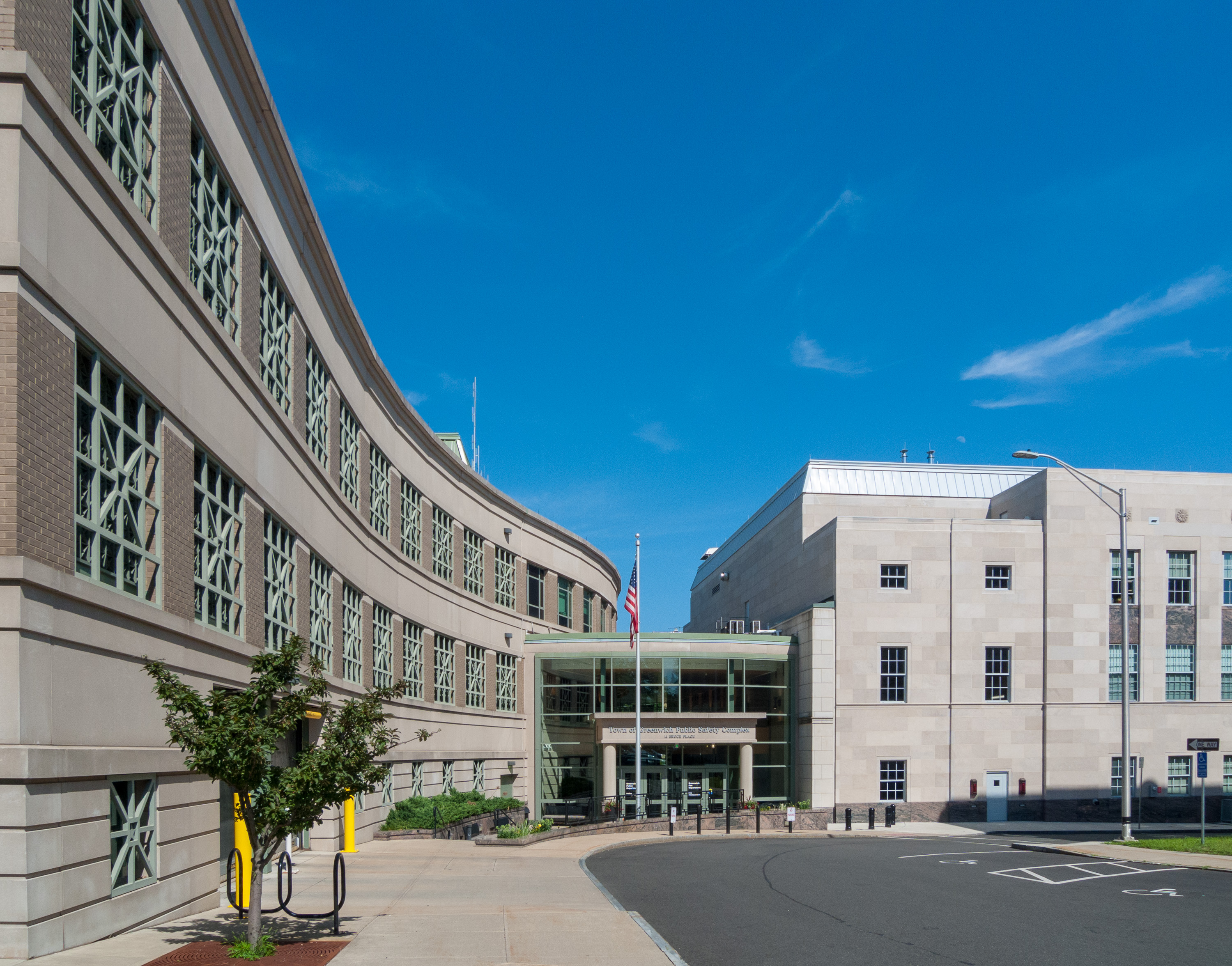
Greenwich Police Chief James Heavey laid out how the department's 40 license plate reader cameras work and why he says residents' privacy is protected, in a public statement posted Tuesday, Sept. 29.
The statement comes two days before most provisions of Connecticut's new law regulating automated license plate readers (ALPRs) take effect Thursday, Oct. 1. Heavey said the department already complies with the law's requirements.
Not Flock
Heavey addressed what he called widespread confusion about "Flock cameras." The Greenwich Police Department does not use any equipment from Flock Safety, the Atlanta-based vendor used by 38% of Connecticut police departments, according to statewide data the Police Officer Standards and Training Council presented Sept. 24.
Instead, GPD operates 13 fixed cameras manufactured by Rekor and 27 vehicle-mounted readers built into the Axon in-car camera systems that state law requires in police vehicles.
The fixed Rekor cameras sit at entry and exit points to town on what GPD calls a "chokepoint model." The department's ALPR page lists six locations:
- East Putnam Avenue & Mason Street
- I-95 Exit 4 & Indian Field Road
- I-95 Exit 5 & East Putnam Avenue
- Field Point Road & Brookside Drive
- Railroad Avenue & Arch Street
- West Putnam Avenue & Field Point Road
How the cameras work
Officers do not watch the feeds live, Heavey said. The cameras run automatically and trigger an alert only when a plate matches a hotlist entry for a stolen vehicle, an AMBER Alert or a wanted or missing person.
Heavey cited specific Greenwich cases: locating missing dementia patients, helping apprehend a suspect who allegedly attempted to assault a middle schooler and solving robberies. Stolen-car alerts are frequent, he said.
The cameras do not identify drivers, use facial recognition, track individuals in real time or feed a national database, according to the department's ALPR page.
Data controls
All plate data stays with GPD. It is not shared with any federal agency and is not held by a third-party vendor, Heavey said. A state FOIA exception shields the data from public disclosure.
Under Public Act 26-14, as amended by Public Act 26-26, departments must delete plate data after 21 days unless it is part of an active criminal investigation. The Connecticut Trust Act bars using plate reader data to investigate suspected immigration violations. GPD may share data only with agencies in Connecticut, New York, Massachusetts or Rhode Island that agree to follow Connecticut's restrictions.
The law also requires quarterly audits. Residents have the right to sue for misuse. An officer who violates the law faces criminal charges and can be permanently decertified by the Police Officer Standards and Training Council.
Departments statewide must file annual reports to the council detailing total plates scanned, searches conducted, data-sharing activity and extended-retention instances.
What's next
The state must develop a model ALPR policy for police departments by Dec. 1, according to a Greenwich Time editorial. The Policing Project at NYU School of Law ranks Connecticut among four states doing the most to prevent ALPR misuse.
Heavey said the technology makes Greenwich safer without compromising anyone's rights.
If you have information about public safety in Greenwich, contact the Greenwich Police Department non-emergency line at 203-622-8004.