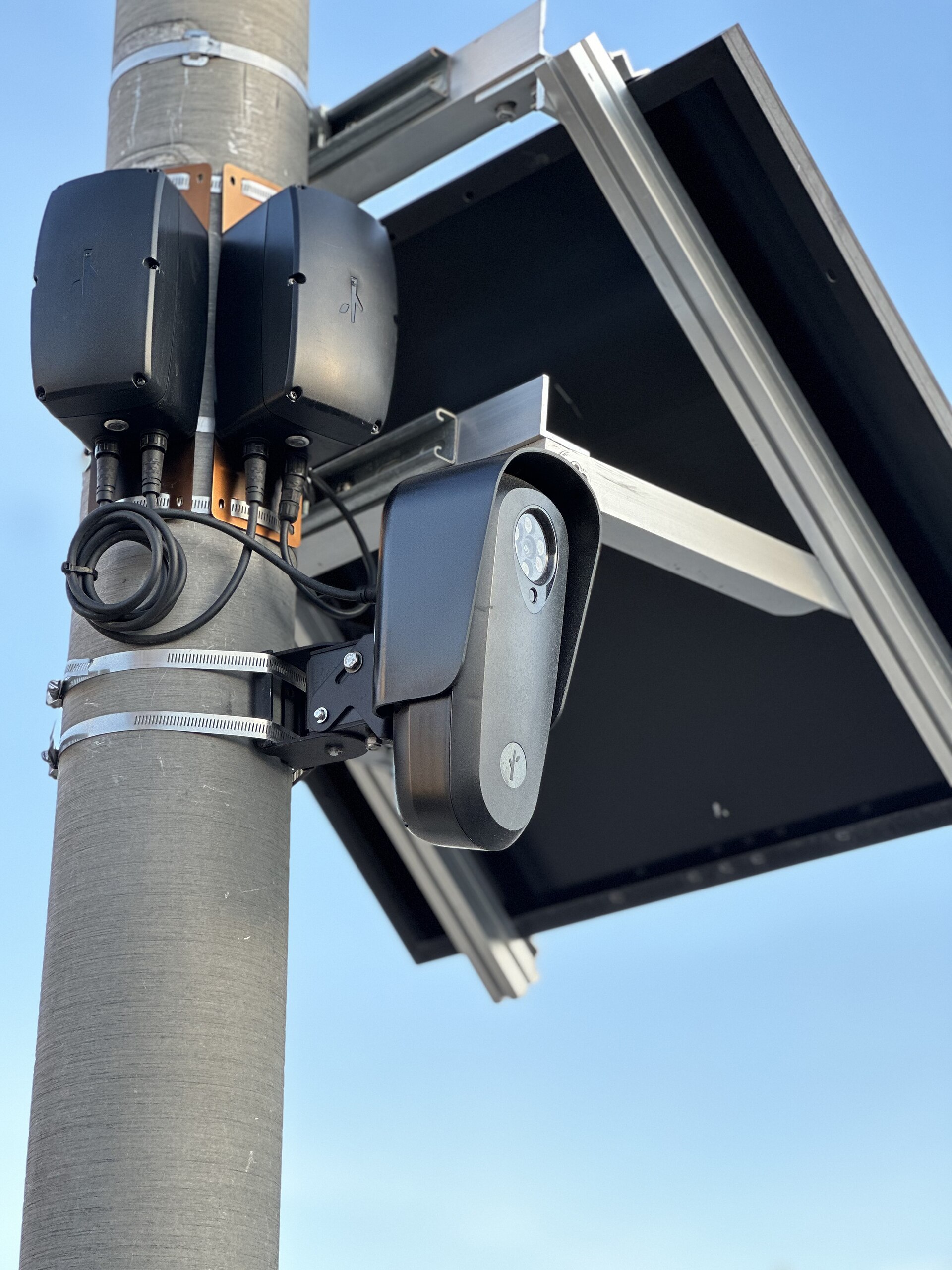
Greenwich residents weighing the privacy tradeoffs of automated license plate readers got new information last week: the company most likely to supply the cameras just overhauled its own rules.
Flock Safety, an $8.4 billion surveillance technology firm with cameras in every U.S. state except Alaska, announced on Thursday, Aug. 13, that it will cut its recommended default data retention from 30 days to seven. The company will also require all law enforcement customers to enter case codes for every search by the end of 2026 and will automatically lock out users whose activity triggers abnormal-behavior flags.
The changes land while Greenwich sits in a holding pattern. First Selectman Fred Camillo confirmed in his Aug. 14 Community Connections newsletter that the town is not currently using Flock cameras. Any future adoption remains frozen under Gov. Ned Lamont's statewide pause on new ALPR installations, which he announced Aug. 8 in a letter to the Police Officers Standards and Training Council requesting privacy guidance within 30 days.
Lamont said at the time that he agreed with residents across Connecticut who want to know what privacy protections exist for people "just going about their lives," and that clear policies on data access and use must be in place before any rollout.
What the new safeguards would mean
If Greenwich eventually adopts Flock, here is what the company's new framework would look like:
- Seven-day default retention. Plate scans would be deleted after one week unless investigators preserve specific records for active cases using a new "Evidence Mode" tool. Flock's analysis shows more than 90% of searches without a full plate number happen within seven days.
- Mandatory case codes. Officers would need to log a reason for every search by the end of 2026. Emergency searches can bypass the requirement but are flagged for supervisor review.
- Automatic lockouts. Users whose activity meets criteria for abnormal behavior are suspended pending administrator review. Flock said the feature has already led to arrests of officers who allegedly abused the system.
- Offense filtering. A department can choose which crime categories other agencies may search its cameras for, blocking queries tied to, for example, immigration enforcement.
Flock CEO Garrett Langley said existing customers keep their current retention periods and the seven-day default applies to new contracts.
Privacy critics unconvinced
The ACLU, which has pushed for a 48-hour retention limit, called the changes insufficient. Senior policy counsel Chad Marlow told NBC News that Flock still compiles "billions and billions of license plate scans every month on people who have done nothing wrong." The ACLU estimates less than 1% of plates scanned by ALPR systems are connected to crimes.
Two Connecticut towns have already walked away from Flock. Windsor voted in July not to renew its contract, and Killingworth followed, both citing privacy concerns. Windsor Police Chief Melanson said officers ask weekly when the cameras will return because the system had been a valuable investigative tool, according to the Greenwich Time.
What's next for Greenwich
The POST-C guidance deadline falls around early September and will set the policy framework Connecticut towns must follow before adopting any new ALPR technology. Flock has also retained independent security firm Bishop Fox to review its products, with results expected in September.
No Board of Selectmen meeting has been publicly scheduled to discuss Flock adoption. Residents can contact the first selectman's office or the police department with questions about the town's position on the technology.