Greenwich commuters face a sharply higher crash risk during the evening drive home now that clocks have fallen back.
Statewide crashes during the 5 p.m. hour jumped 36% in November compared to October between 2020 and 2025, according to AAA Northeast's analysis of data from the Connecticut Crash Data Repository. That amounted to 5,615 crashes in the 5 p.m. hour in November versus 4,134 in October, Greenwich Free Press reported.
Clocks fell back one hour Sunday, Nov. 1. The shift means sunset arrives about an hour earlier, catching many drivers mid-commute in darkness they weren't facing a week ago.
Pedestrians and cyclists at greatest risk
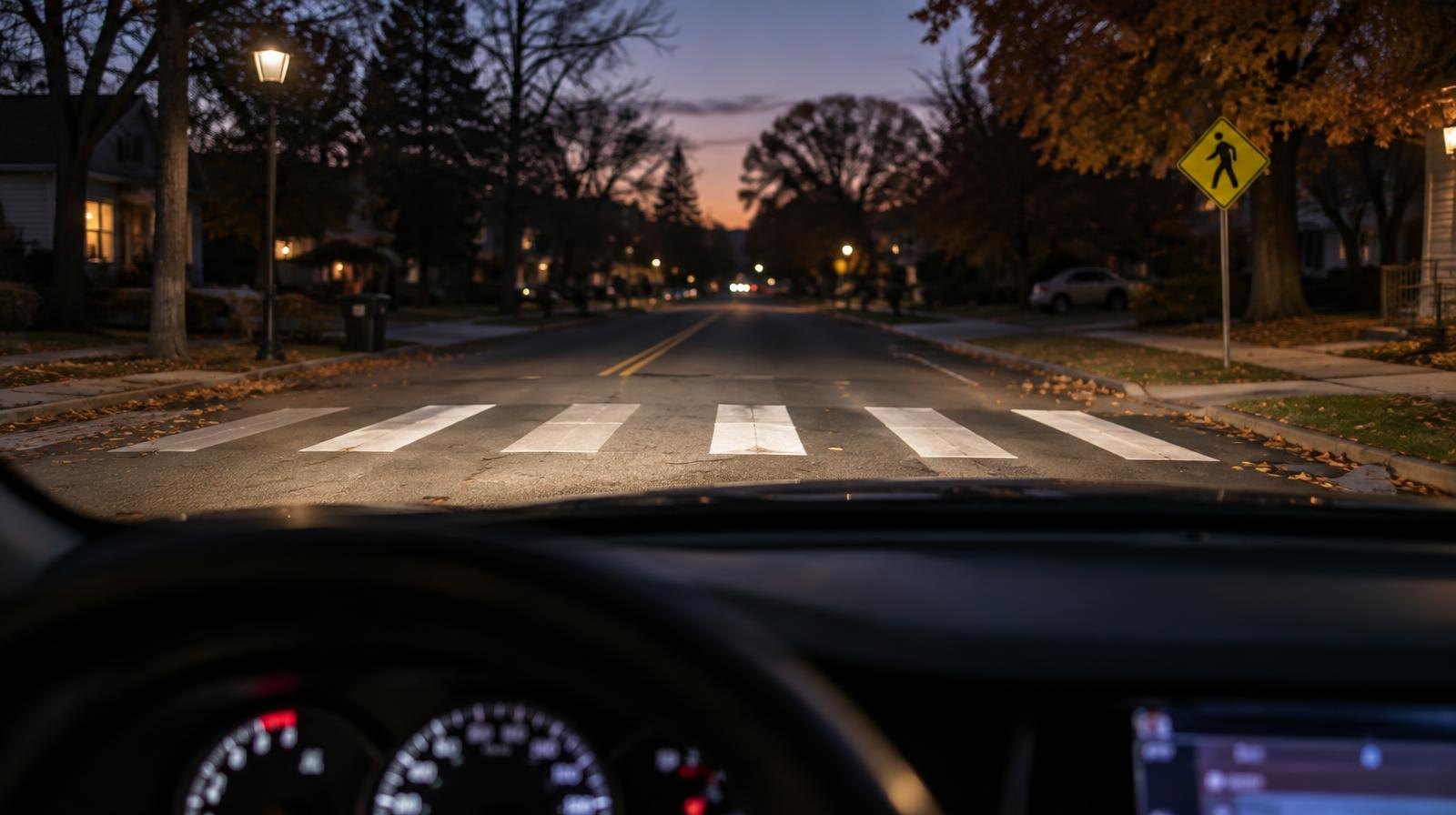
The danger is especially acute for people on foot. In the two weeks after the time change, the 5 p.m. to 6 p.m. window accounted for 17% of crashes involving pedestrians statewide since 2015. That was nearly triple its share in the two weeks before clocks changed, according to a Greenwich Time analysis of state crash data.
Eric Jackson, executive director of the Connecticut Transportation Institute, told Greenwich Time that October, November and December are "usually the three worst months for pedestrian and bicycle crashes."
Jackson pointed to reduced visibility and darker winter clothing as factors. "They don't stand out at night very well, so it becomes harder to see pedestrians because it's darker, they're wearing darker clothes and people are driving home later," he said.
Between 2015 and 2025, more than 14,600 crashes involving pedestrians and 5,000 involving cyclists occurred in Connecticut, according to Greenwich Time's analysis. Those crashes killed 632 pedestrians and 42 cyclists.
Drowsy driving compounds the risk
Jillian Young, director of public relations for AAA Northeast, said the time change creates a double threat. "The end of daylight saving time brings a combination of disrupted sleep schedules and earlier sunsets that can throw drivers off," Young said.
AAA research found that many drivers don't recognize their own fatigue. In a simulated nighttime driving experiment, the AAA Foundation for Traffic Safety found 75% of participants who rated their drowsiness as low were actually moderately or highly drowsy.
Disrupted sleep cycles after the time change can take several days or even weeks to fully resolve, according to AAA Northeast.
What drivers can do
AAA Northeast recommends several steps for safer evening commutes:
- Get at least seven hours of sleep before driving.
- Slow down at intersections, especially where pedestrians are likely.
- Keep headlights and windshields clean and in good condition.
- Increase following distance to four or more seconds.
- Watch for sun glare, which may hit at earlier hours after the change.
Eva Zymaris, a spokesperson for the Connecticut Department of Transportation, told Greenwich Time that as of Oct. 14, 32 pedestrians had been killed in Connecticut in 2026. Preliminary data showed 67 pedestrian deaths in 2025.
Residents can report traffic safety concerns to the Greenwich Police Department's non-emergency line at (203) 622-8000.