Measles outbreaks in New York and Pennsylvania have put Greenwich families on alert as case counts climb to levels not seen in more than 30 years.
New York Gov. Kathy Hochul declared a statewide disaster emergency on Oct. 5 after the state recorded 108 cases, 92 of them since mid-July across 18 rural counties. Pennsylvania's outbreak is far larger. The Pennsylvania Department of Health reported 1,260 confirmed cases in 43 counties as of Friday, Oct. 16, with 238 hospitalizations and five confirmed deaths. A sixth death in Franklin County is under state review.
Nationally, the Centers for Disease Control and Prevention (CDC) counted 4,410 measles cases as of Friday, Oct. 16. About 96% involved people who were unvaccinated or whose vaccination status was unknown, according to the CDC.
No state has reported more than 1,000 cases in a single outbreak in 35 years, according to CIDRAP, the University of Minnesota's infectious disease research center.
Why Greenwich families should pay attention
Greenwich shares commuter routes, workplaces and shopping destinations with New York, as columnist Russ Barksdale Jr. wrote in the Greenwich Sentinel on Friday, Oct. 16. "A state line cannot stop a virus," Barksdale wrote.
Connecticut has reported three measles cases so far. The state's kindergarten measles, mumps and rubella (MMR) vaccination rate stands at 98.6% for the 2025-26 school year, the second highest in the country, according to CT Insider. Connecticut Department of Public Health Commissioner Manisha Juthani said at a press briefing that the state has reached "an all-time high" for MMR coverage.
But statewide averages can mask pockets of vulnerability. Juthani said some individual schools have lower rates than others. Connecticut allows medical exemptions, and about 0.5% of kindergartners held one in 2025-26. The state repealed religious exemptions in 2021, though students who had one on file before the repeal may keep it through 12th grade.
National vaccination rates are falling
Nationally, kindergarten MMR coverage dropped to 92.4% in the 2025-26 school year, down from 95% before the pandemic, according to CDC data reported by PBS NewsHour. Vaccine exemptions among kindergartners hit a record 4.2%, up from 3.6% the prior year. Connecticut's exemption rate, by contrast, was below 0.5%.
Hochul's executive order, in effect until Nov. 4, expands who can administer MMR vaccines in New York to include paramedics, pharmacists and midwives. It also allows pharmacists to vaccinate children as young as 2, according to ABC News.
How measles spreads and how to respond
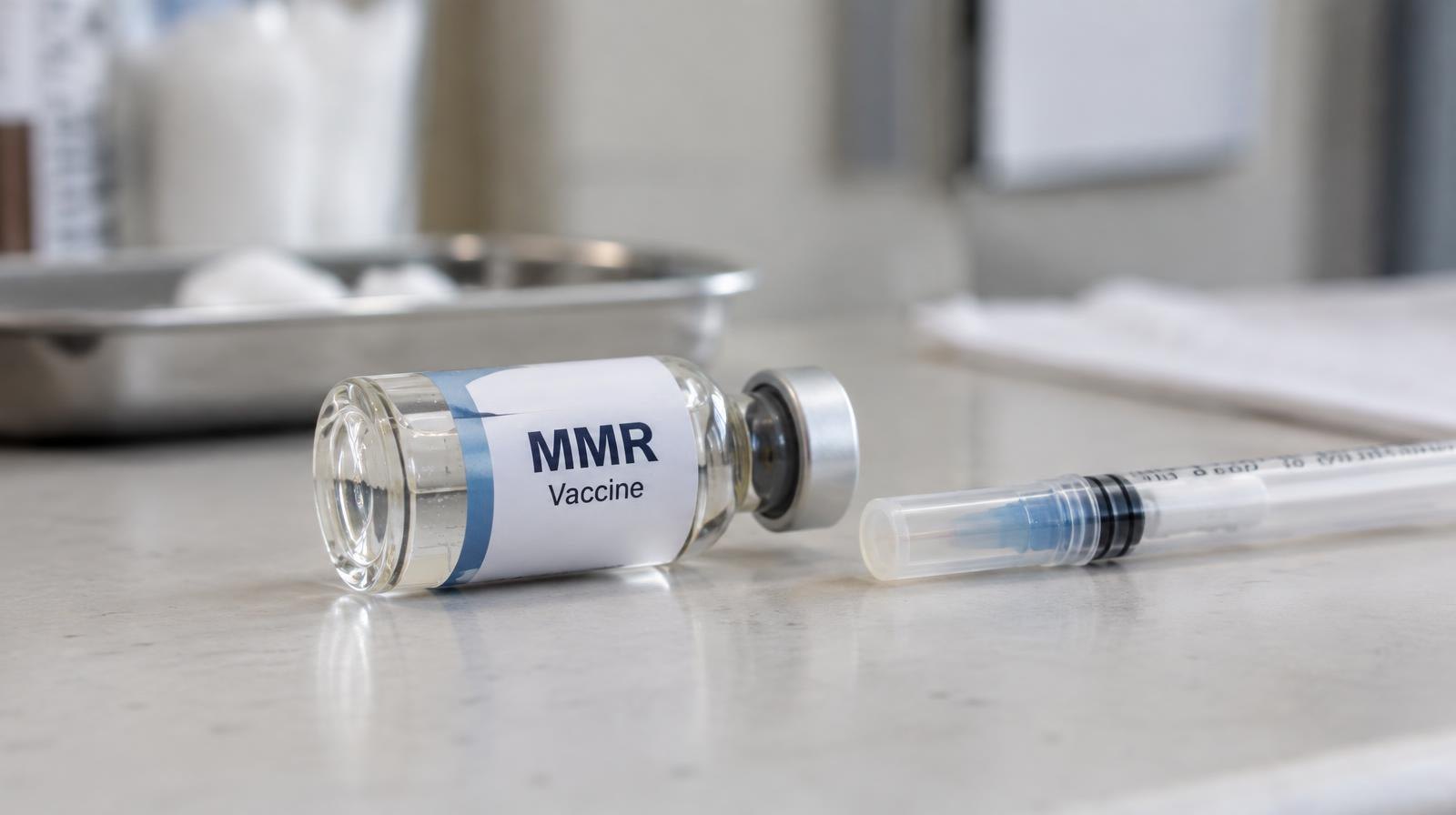
The CDC recommends two doses of the MMR vaccine. The first is given at 12 to 15 months, the second between ages 4 and 6. One dose is 93% effective; two doses are 97% effective. Infants 6 to 11 months old may receive an early dose if they live in or travel to areas with active outbreaks, though that dose does not replace the two routine shots.
Measles spreads through the air and can linger in a room for up to two hours after an infected person leaves, according to New York and Pennsylvania health officials. Symptoms begin with fever, cough, runny nose and red, watery eyes, followed days later by a rash. A person can spread the virus four days before the rash appears.
Families who suspect exposure should call their pediatrician or local health department before visiting a medical office, so staff can take steps to limit further spread.