Greenwich’s state Senate candidates disagreed over Connecticut’s fiscal guardrails at an Oct. 7 debate while finding common ground on local housing control and concerns about data centers.
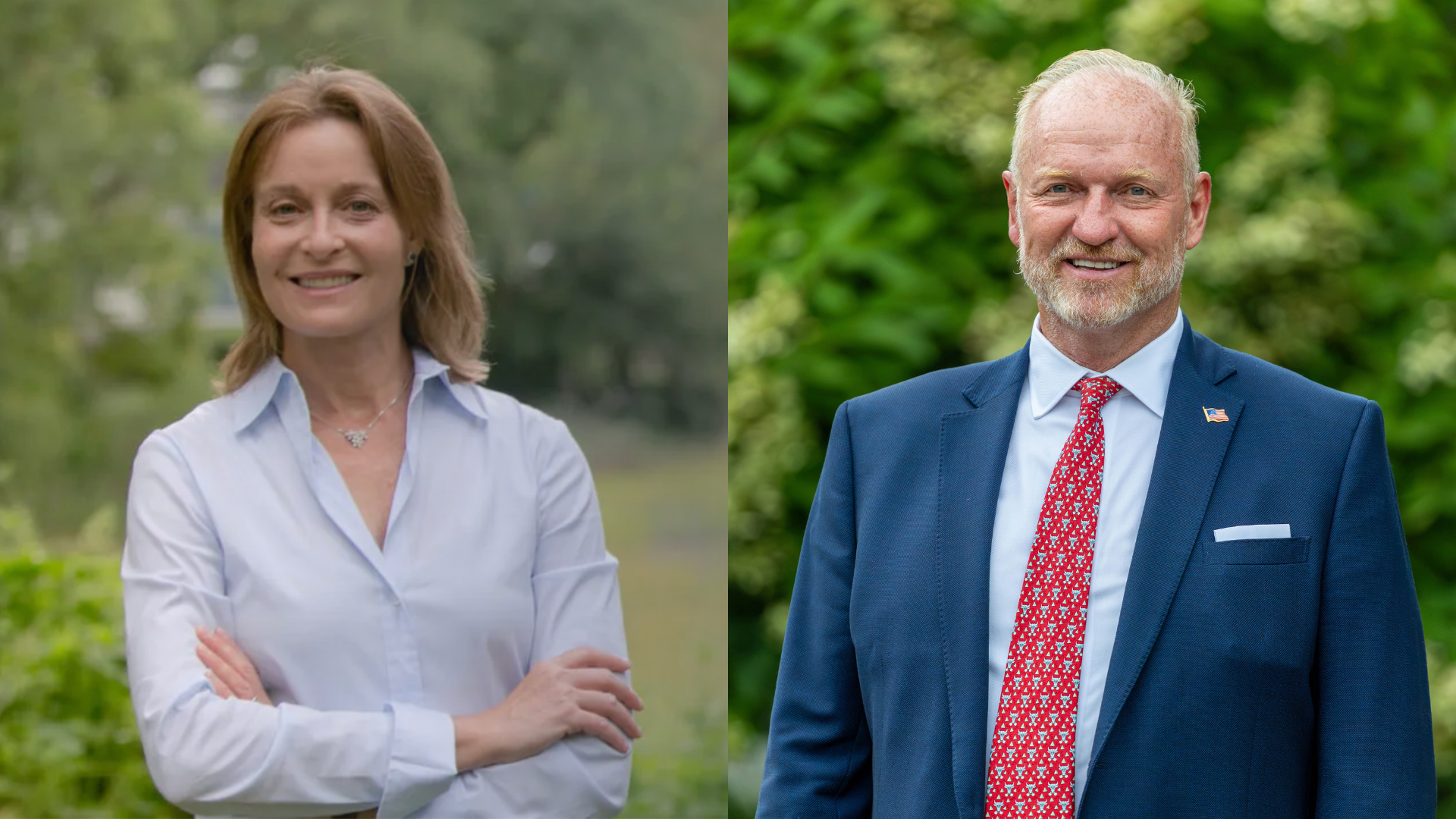
Democrat Jill Oberlander and Republican Joe Kelly, who also has the Independent Party nomination, participated in the Round Hill Association debate at the Round Hill Community House. Association board President Brendon DeSimone moderated, according to Greenwich Free Press.
The candidates are running in the Nov. 3 election to represent the 36th Senate District, which includes Greenwich and portions of Stamford and New Canaan.
Pensions and fiscal guardrails
Oberlander defended using excess revenue to reduce pension debt. Kelly advocated spending restraint and lower taxes to attract businesses, according to Greenwich Free Press.
Connecticut budgeted $3.14 billion toward unfunded pension liabilities for teachers and state employees in fiscal 2026, according to a June report from the Connecticut Business and Industry Association.
The report put the Teachers’ Retirement System at 64% funded and the State Employees Retirement System at 60% funded. CBIA said both were at two-decade highs but remained among the country’s worst-funded public pension systems.
Oberlander cited roughly 70% funding during the debate, a figure higher than either system’s funding level reported by CBIA.
The candidates also differed over an exception to the state’s spending cap. Kelly criticized the decision, while Oberlander defended it as an authorized response to unusual circumstances.
In May, lawmakers adopted a $28.1 billion budget for fiscal 2027. The plan increased allowable spending under the cap by about $85 million and finished approximately $600,000 below the adjusted limit, CT Mirror reported.
State law permits an exception when the governor declares an emergency or extraordinary circumstances and at least three-fifths of each legislative chamber approves the additional spending.
Affordable housing
Kelly favored repealing Connecticut’s affordable housing appeals law, known as 8-30g. Oberlander criticized the law’s effectiveness but emphasized collaboration, citing insufficient legislative support for repeal, according to Greenwich Free Press.
The law provides a special court appeals process for qualifying affordable housing proposals denied by local land-use commissions.
Municipalities are exempt when at least 10% of their housing stock meets the law’s affordability criteria. About 30 of Connecticut’s 169 municipalities met that threshold, according to 2025 data cited by CT Mirror. Municipalities can also qualify for temporary moratoriums by demonstrating progress in adding affordable housing.
Data centers and AI
Oberlander called for pausing data center proposals, citing electricity demand and New York’s approach. Kelly said such projects provide temporary construction work but few permanent jobs.
“AI scares the hell out of me,” Kelly said, according to Greenwich Free Press. “We should take it slowly and understand it.”
Next debate scheduled Oct. 14
The League of Women Voters of Greenwich will host the next 36th District debate Wednesday, Oct. 14, at First Congregational Church of Greenwich, 108 Sound Beach Ave., in Old Greenwich, according to Patch.
The Senate debate is scheduled for 7 to 7:45 p.m. Anthony Presta, a social studies teacher at Wilton High School, will moderate.
Greenwich Community Television will livestream the event. Registration is required for in-person attendance through the League’s event page.