Most provisions of the new federal housing law that took effect July 11 will have little practical impact on Greenwich, according to a local real estate analyst's review.
Mark Pruner, co-founder of the Greenwich Streets Team at Compass, published an analysis in the Greenwich Sentinel on Monday, Aug. 31. He concluded the 21st Century Renewing Opportunity in the American Dream (ROAD) to Housing Act will likely hurt Greenwich slightly. The town's high property values and limited land put it outside the reach of most of the law's programs.
The act passed the Senate 85-5 and the House 358-32. President Trump neither signed nor vetoed it. The National League of Cities called it the first comprehensive housing package in decades, noting it is deficit-neutral, preserves local authority and imposes no unfunded mandates on state or local governments.
Where it matters: manufactured ADUs
One provision stands out for Greenwich. Title 3 of the act eliminates the requirement that manufactured housing units, including accessory dwelling units, have a steel undercarriage. That rule originally applied to trailer homes transported on highways.
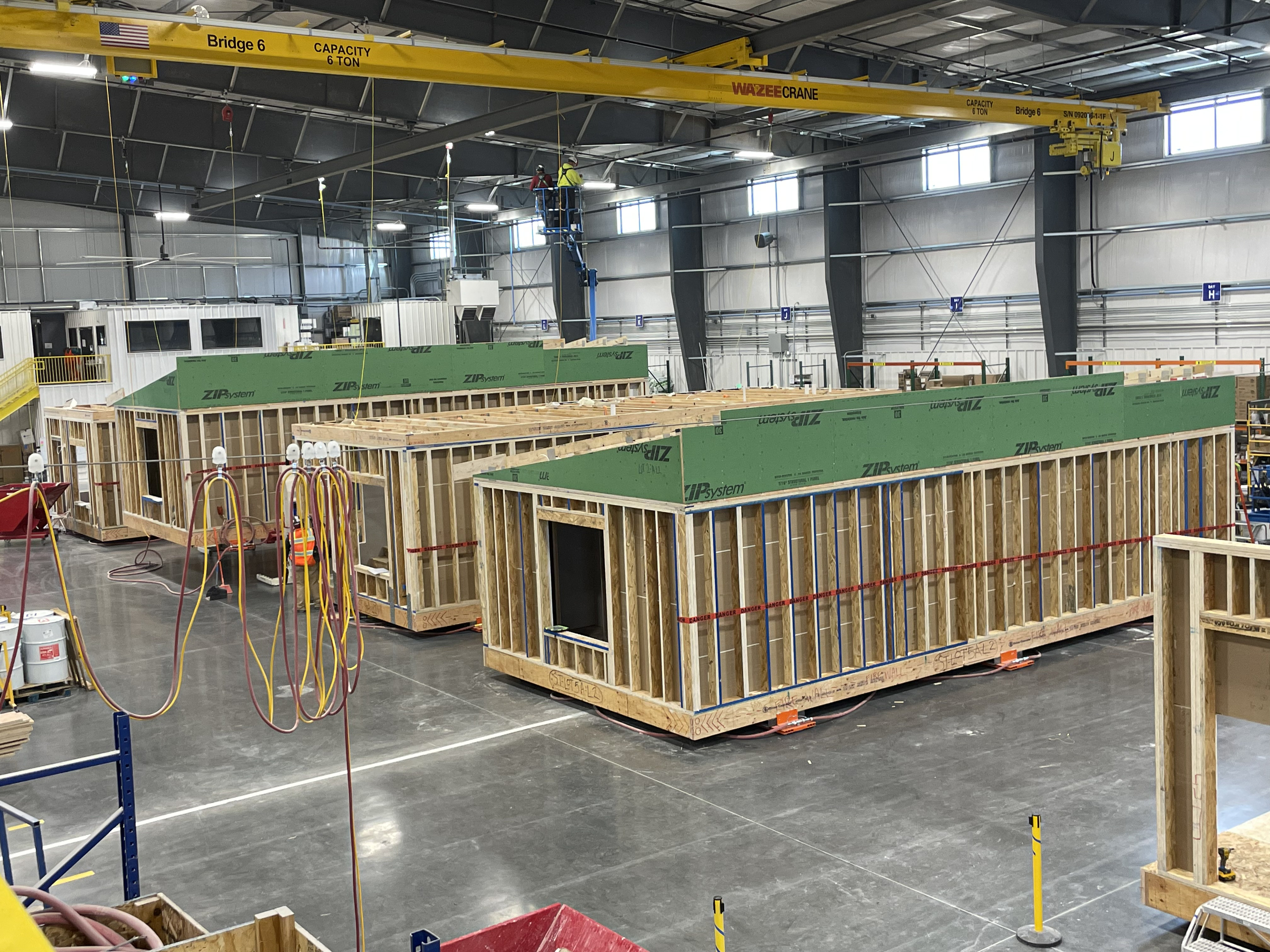
Pruner wrote that he is working with an unnamed start-up, created by a local architect, builder and financial backer, to build manufactured ADUs in Greenwich. The units range from 600 to 1,200 square feet, complying with the Planning and Zoning Commission's 2023 revised ADU regulations. They are built in Pennsylvania, trucked to Connecticut and placed by crane.
"The goal is to go from contract signing to certificate of occupancy in 2–3 months," Pruner wrote.
The start-up is still working through town regulations one department at a time. No formal hearing date has been set.
Pruner also noted the chassis change could open the door to small trailer parks in Greenwich. He pointed to Westport as a town that has operated one with roughly a dozen trailers for decades without issues.
A small hit to block grants
The act's "Build Now" provision reduces future Community Development Block Grant (CDBG) allocations by 10% for municipalities where housing growth falls below the median rate among peer recipients. Pruner wrote that Greenwich, as a low-growth, land-constrained suburb, is likely to face that cut.
The dollar impact would be modest. As of April, before the act took effect, Greenwich had averaged about $750,000 per year in CDBG funds over the previous five years, according to CT Mirror reporting. No post-act allocation figures are available yet. Tyler Fairbairn, the town's community development and grants administrator, told CT Mirror the town is one of 23 Connecticut municipalities receiving the grants. The funds have supported a domestic abuse services center at the local YWCA, food banks and entrepreneurial training for income-eligible young women in public schools.
Based on that historical average, a 10% reduction would amount to roughly $75,000 against a town budget that Greenwich Time reported First Selectman Fred Camillo proposed at $543 million for 2026-27. Pruner called the potential cut negligible relative to the town's half-billion-dollar budget.
What doesn't apply
Several other provisions have no practical effect in Greenwich, Pruner wrote. Title 2's exemption of housing projects from National Environmental Policy Act (NEPA) review changes nothing because Greenwich rarely triggered that review. Title 10's cap limiting institutional investors to 350 single-family homes is moot in a town where Pruner pegged the median house price at $3.7 million.
A $200 million grant program for municipalities that change zoning rules is unlikely to attract Greenwich, Pruner wrote, because the Planning and Zoning Commission and the Representative Town Meeting would be competing against all 50 states for a small pool. FHA loan-limit increases and pattern-book design grants also fall short of Greenwich price points.
"Overall, Greenwich is just too different from other towns for any of the 21st Century Road to Housing Act to have a noticeable effect here," Pruner wrote. The manufactured ADU provision and the CDBG reduction remain the two areas to watch.